
Fishing games are the most underestimated category in online casino gaming and crypto casino tournaments. They sit between slots and arcade games, borrowing from both but playing like neither, and most players have either never tried one or dismissed them as filler content. That's a mistake, especially when a fishing casino tournament is on the table.
A fishing game tournament takes a format that already rewards attention and target selection, and adds a leaderboard. You're not just catching fish for payouts anymore, you're competing against other players for a prize pool. And in a format where the scoring is based on your biggest catch, the strategy has more depth than most players expect.
This guide covers how fishing casino games work, the scoring models used in fishing casino tournaments across the industry, and the strategy that separates leaderboard contenders from casual players, whether you're playing a crypto fishing game or exploring the format for the first time.
If you've never played a fishing game at an online casino, here's what you're walking into.
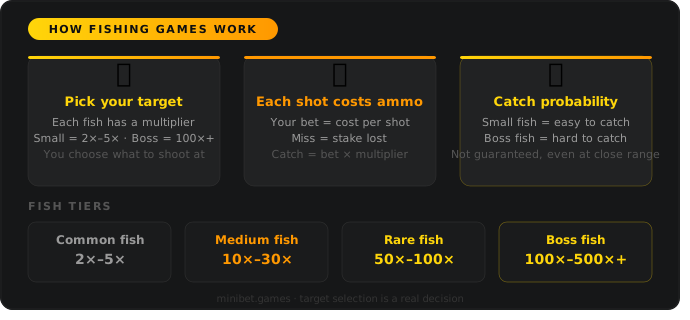
You're placed in an underwater scene; a screen full of fish, sea creatures, and special targets, all moving across the display. Each fish has a multiplier value attached to it. Small, common fish carry low multipliers (2×–5×). Larger, rarer fish carry higher ones (20×–50×). Boss fish and special creatures (the ones that appear infrequently and are harder to catch) can carry multipliers north of 100×.
You choose your bet size (your "ammo cost" per shot), aim at a target, and fire. Every shot costs your stake. If you catch the fish, you're paid your bet multiplied by that fish's value. Miss or fail to catch it, and your shot cost is gone.
The fishing game odds aren't purely random in the way a slot spin is. Each fish has a catch probability: smaller fish are easier to catch, bigger fish are harder. A 50× boss fish might only have a 5–10% catch rate per shot. So even when you see a high-value target on screen, landing it isn't guaranteed. Your ammo (bet) is consumed whether you catch or miss.
This is what makes fishing games mechanically distinct from slots: you choose what to shoot at. Target selection is a real decision with real consequences for your bankroll and (in a tournament context) your leaderboard score.
The format has roots in the fishing arcade game casino machines that have been popular across Asian markets for years. Online versions from providers like JDB, JILI, Spadegaming, and others have brought the mechanic to a global crypto casino audience, often with provably fair mechanics and significantly more variety in fish types, weapons, and bonus features.
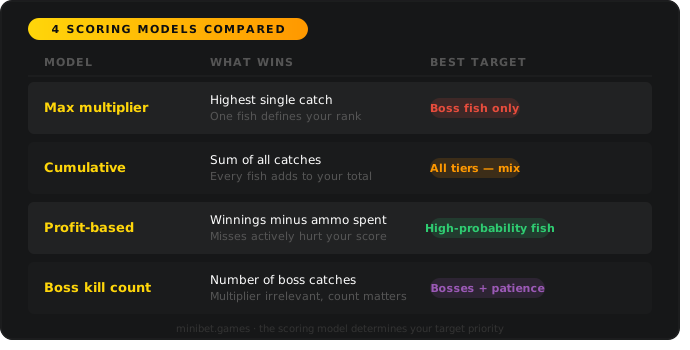
Like crash casino tournaments, fishing tournaments can be scored in multiple ways. The scoring model determines what "winning play" looks like — and in a game where you actively choose your targets, that distinction matters more than in any other casino format.
Here's how each fishing game tournament scoring model works.
1. Max Multiplier / Biggest Catch Your score is the single highest-value fish you successfully catch during the tournament period. Catch a 200× boss fish on day three and nothing else comes close? That's your score. Everything else you caught that week is irrelevant.
What it rewards: Boss hunting. You want to find the rarest, highest-multiplier creature on the screen and throw shots at it until you land one. Common fish are a distraction in this format.
Strategic implication: This is the highest-variance fishing tournament format. Your fishing game bankroll needs to support enough shots at boss-tier targets to give yourself a realistic chance. Most shots will miss, the strategy is surviving long enough to connect.
2. Cumulative Points Your score is the sum of all fish multipliers you successfully catch across the tournament period. Every catch counts, a 3× common fish adds 3 to your total, a 50× rare fish adds 50.
**What it rewards: **Volume and consistency. Players who catch steadily across many sessions (mixing common and medium fish with occasional larger catches) build scores that pure boss-hunters struggle to match.
Strategic implication: Ammo efficiency matters more here than anywhere else. Every missed shot costs your bet without adding to your score. Targeting fish you can actually catch (even at lower multipliers) is often more valuable than repeatedly missing a boss.
What it rewards: Efficiency above everything. Every missed shot directly hurts your score. This format punishes the "spray and pray" approach harder than any other, because every bullet that doesn't land a fish is a deduction.
Strategic implication: Target selection becomes ruthlessly important. The optimal play is to focus on fish with the highest catch probability relative to their multiplier, medium-tier fish that hit often enough to generate consistent positive returns. Boss fish are risky propositions in this format unless you have exceptional shot discipline.
4. Boss Kill Count Your score is the number of boss or special fish you successfully catch during the tournament period. Multiplier doesn't matter beyond qualifying as a "boss", one boss kill counts the same whether it's 100× or 500×.
What it rewards: Focused boss hunting with a consistency requirement. Landing one boss isn't enough, you need to land multiple. This format favours players who understand boss spawn patterns and timing.
Strategic implication: Bankroll planning around boss encounters is critical. Boss fish appear at intervals, some games have timed spawns, others have probability-based appearances. When a boss appears, you need enough ammo reserved to take enough shots to have a realistic chance of catching it. Spending your entire bankroll on common fish between boss appearances leaves you empty-handed when it matters.
Most fishing game tips you'll find amount to "shoot the big fish." That's not strategy, it's wishful thinking. Competitive fishing game strategy starts with understanding the mechanics beneath the surface and making decisions that most players don't bother thinking about.
Target Selection: The Decision That Defines Your Score In every other casino tournament format (slots, crash, live casino), the game presents outcomes to you. In fishing, you choose your target. That makes target selection the single most important strategic lever in any fishing casino tournament.
The instinct is to aim for the biggest fish on screen. But the biggest fish also has the lowest catch probability and costs the most in wasted shots when you miss. The best fishing game strategy accounts for the catch-to-cost ratio: how many shots will it take (on average) to land this target, and is the payout worth the ammo spent?
In a max multiplier format, the math is different - you only need one catch, so boss hunting is correct. The question becomes: do you have enough bankroll to sustain enough shots at boss targets to give yourself a statistical chance? If your bankroll supports 50 shots and boss fish have a 5% catch rate, you're looking at roughly 2–3 expected catches across the session. That's enough. If your bankroll only supports 10 boss-level shots, you're gambling on a 40% chance of landing even one.
In a cumulative format, medium-tier fish (10×–30×) with reasonable catch rates are often the optimal target. They contribute meaningful points per catch while being efficient enough to sustain a long session. The player who methodically catches medium fish for 200 rounds will usually outscore the player who boss-hunts for 50 rounds and connects twice.
In a profit-based format, the optimal target is the fish with the best expected value per shot — factoring in both the multiplier and the probability of catching it. Common fish with high catch rates can actually be the most profitable targets if the catch rate justifies the multiplier.
Ammo Management: The Fishing Equivalent of Bankroll Management Every shot costs your stake. In a game where you might fire hundreds of shots per session, fishing game bankroll discipline is the difference between lasting a full tournament period and burning out in the first hour.
The fundamental rule: size your shots so you can survive the session. If the tournament runs a full week and you plan to play three sessions, divide your total budget across those sessions and your shot cost within each one. Running out of ammo halfway through the week is a strategic failure, not bad luck.
In max multiplier formats, allocate a higher percentage of your session budget to boss-tier shots. You need fewer shots overall, but each one costs more and most will miss. Reserve enough budget for at least 30–50 boss-level attempts. In cumulative and profit formats, flat shot sizing (same bet per shot, every round) is the cleanest approach. It makes your score accumulate predictably and prevents tilt-driven over-betting after a string of misses.
The Spray vs. Snipe Debate Fishing games let you fire rapidly. The temptation (especially in a tournament) is to spray shots across the screen at everything that moves. More shots, more chances, more score.
But spraying is expensive. Every missed shot is pure cost with zero return. In a profit-based format, spraying is the fastest way to a negative score.
The alternative: snipe. Pick a target, commit to it, fire measured shots until you catch it or it leaves the screen, then pick the next target. This approach is slower but dramatically more ammo-efficient.
In practice, the best tournament players blend both approaches. They spray at clusters of common fish (high catch probability, low cost per shot) to build steady points, then switch to focused sniping when a high-value or boss-tier target appears. The blend changes depending on the scoring model, heavier spray in cumulative, heavier snipe in max multiplier and profit-based.
Timing and Boss Spawns Boss fish and special targets don't appear constantly. Most fishing games cycle them on intervals, sometimes visible timers, sometimes probability-based. Competitive fishing game tournament players pay attention to these patterns.
If you notice that boss fish tend to appear every 60–90 seconds, you can pace your ammo accordingly: spend modestly during the gaps, then go heavy when the boss window opens. This isn't a guaranteed system (spawn timing has randomness built in), but it's a framework for allocating your budget across the session rather than firing blindly.
If you've played crypto slots tournaments, the fishing format will feel familiar in structure but different in execution. Both use leaderboards, both have weekly or timed formats, and both reward top finishers from a shared pool. The difference is agency.
In a fishing slot tournament (sometimes listed alongside regular slots) you're not just waiting for outcomes. You're actively selecting targets, managing ammo, and making real-time decisions every few seconds. That makes the format closer to an arcade competition than a passive casino event.
Compared to crash casino tournaments, the pace is different too. Crash is fast; one decision per round, cash out or bust. Fishing is sustained; hundreds of decisions across a session, each one small but compounding.
For players who want an online fishing game experience with genuine competitive structure, the tournament format turns a category most people overlook into one of the most engaging ways to compete at a crypto casino.
Minibet runs its fishing tournament as the Fishing Circuit; one of four weekly circuits in a 52-week season alongside the Slots Circuit, Live Casino Circuit, and Crash Circuit. Together, they form the full Minibet Circuits, a crypto casino tournament season totalling $440,000 MBUSD in prizes.
The Fishing Circuit uses max multiplier scoring. Your position on the leaderboard is determined by the highest single fishing game multiplier you successfully land during that week. One catch, one number.
Each week, the top 10 players share $2,000 MBUSD in prizes. Entry is automatic, your first qualifying shot enters you onto the leaderboard. Mega Circuit weeks (13, 26, 39) raise the pool to $3,000 MBUSD with 20 winners. The Week 52 Championship pays $5,000 MBUSD to the top 50. All with minimum wagering requirements.
If you've been looking for a fishing game format where target selection, ammo management, and timing actually matter (not just for your wallet but for a leaderboard position), the Fishing Circuit is built for exactly that.
Run the Circuit. Own the Week.
What is a fishing casino tournament? A fishing casino tournament is a timed competition where players earn scores from their fishing game sessions. Scoring varies by format, it could be based on your biggest single catch, total catches, net profit, or boss kill count. Top finishers on the leaderboard share a prize pool.
How do fishing casino games work? Fishing games place you in an underwater scene with fish moving across the screen. Each fish has a multiplier value and a catch probability. You choose a bet size (your shot cost), aim at targets, and fire. Catching a fish pays your bet times its multiplier. Missed shots cost your stake with no return.
How to win fishing games in a tournament? There's no guaranteed method, but target selection and ammo management are the two biggest levers. Match your target priority to the scoring model: boss fish in max multiplier formats, efficient medium-tier fish in profit-based formats, and high-volume mixed targeting in cumulative formats. Managing your budget so you can sustain a full session is as important as any individual catch.
What is the best fishing game strategy? It depends on the tournament scoring model. In a max multiplier format, focus your budget on boss-tier targets and accept that most shots will miss. In cumulative formats, consistent catches across all fish tiers build the most competitive score. In profit-based formats, target fish with the best expected value per shot, often medium-tier with reasonable catch rates.
Are fishing games skill-based? Partially. The catch outcomes have a random probability component, you can't guarantee catching any specific fish. But target selection, ammo management, shot timing, and boss spawn awareness are all player decisions that meaningfully affect results, especially across a multi-session tournament.
What is a fishing slot tournament? Some platforms list fishing games alongside slots in their tournament structure. A fishing slot tournament applies leaderboard scoring to fishing game play, either as a standalone fishing circuit or as part of a broader casino tournament system.
Can I use fishing game strategy to guarantee a win? No. The catch probability for each fish is set by the game, no amount of strategy changes the randomness of individual outcomes. What strategy does is help you allocate your bankroll, select targets, and manage sessions in a way that gives you the best statistical chance of a strong leaderboard finish. The difference between a casual player and a competitive one is decision quality over hundreds of shots, not any single guaranteed outcome.
Gambling should be fun. If it stops feeling that way, help is available. Visit BeGambleAware.org or call the National Gambling Helpline on 0808 8020 133 for free, confidential support.
This content is for informational purposes only. Betting involves financial risk. Please play responsibly.


-yswxu0.webp)