


An accumulator, sometimes called a parlay or multi bet, is a single wager that combines two or more individual selections into one bet. Every selection (or "leg") must win for the bet to pay out. If even one leg loses, the entire accumulator loses. The appeal is that the odds of each leg multiply together, producing a combined payout far larger than any single bet would offer. The risk is that each added leg makes the overall bet significantly harder to win. This guide explains how accas work, how the odds are calculated, and how to approach them without falling into the traps that catch most beginners.
If you're still getting comfortable with decimal odds and basic bet types, the sports betting guide covers all of that from the ground up. The section on betting odds explained is particularly useful to read before you get into accumulators, since the multiplication logic below builds directly on understanding decimal odds.
The maths behind accumulator odds is straightforward once you see it: you multiply the decimal odds of each leg together. The result is your combined odds, and you multiply that by your stake to get the potential return.
Here's a worked example. Say you build a 4-leg football accumulator: Leg 1 backs Team B to win at odds of 1.85, Leg 2 backs a draw at 3.40, Leg 3 backs Team E to win at 1.50, and Leg 4 backs Team G to win at 2.10.

Multiply the four legs together and the combined multi bet odds come out at 1.85 × 3.40 × 1.50 × 2.10 = 19.81. With a stake of 5 MBUSD, the potential return is 5 × 19.81 = 99.05 MBUSD. That's a nearly 20x multiplier on a 5 MBUSD stake. On paper, that looks incredible.
Now look at the implied probability. Each leg's implied probability (1 ÷ odds) looks reasonable on its own: 54%, 29%, 67%, 48%. But the combined probability of all four landing is roughly 54% × 29% × 67% × 48% = ~5%. A bet that looks like easy money is, in reality, a bet you'd expect to lose roughly 19 times out of 20.
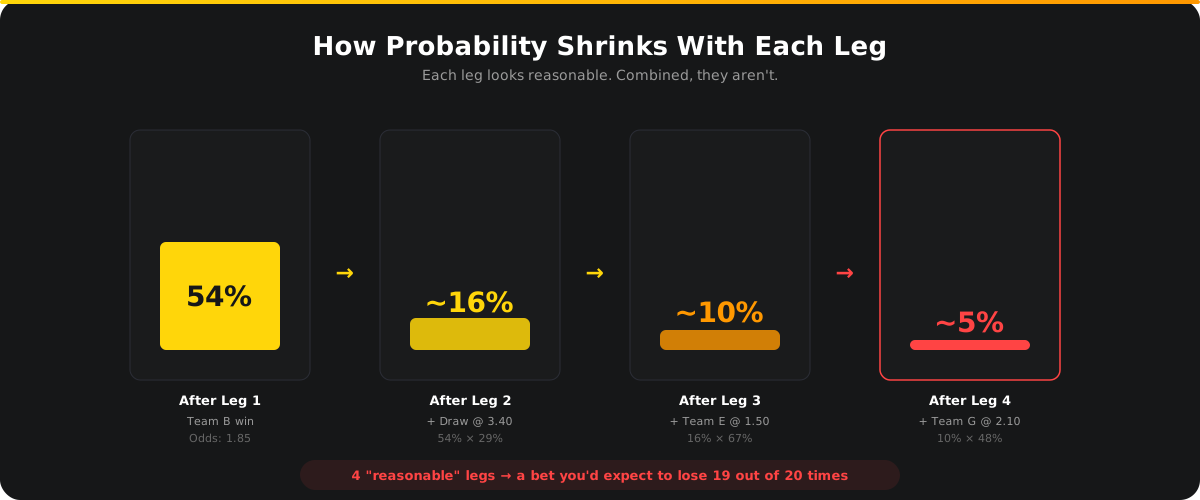
That gap between how the payout looks and how the probability actually works is exactly why accumulators are profitable for sportsbooks and expensive for most bettors.
The reason accumulators catch beginners off guard is that each individual leg can look perfectly reasonable. Backing a favourite at 1.50 feels safe. Adding a second favourite at 1.60 still feels safe. By the time you've added four or five legs, you're looking at combined odds of 8x or 10x and thinking you've found free money, when what you've actually done is turned four decent individual bets into one that's very unlikely to land.
Three specific dynamics make accumulators riskier than they appear:
Probability compounds against you. Each leg doesn't just add risk, it multiplies it. A single bet at 1.50 (67% implied probability) is one thing. Four bets at 1.50 combined give you a combined probability of about 20%. Six legs at similar odds drops you below 10%.
One bad result kills everything. In parlay betting, there's no partial payout for getting three out of four legs right. A 75% success rate across your selections still results in a total loss. That's fundamentally different from placing the same bets individually, where three winners and one loser still leaves you in profit.
The sportsbook margin stacks. The overround (the sportsbook's built-in margin on each market) applies to every single leg. On a single bet, that margin is small. Across a 5-leg accumulator, it compounds in the same way the odds do, quietly eroding the value of the combined price.
None of this means accumulators are off-limits. They mean you should treat them as what they are: high-variance entertainment bets, not the core of your betting approach. A few acca tips that keep them in the right lane:
Keep the legs low. Two or three legs is a sweet spot where you get a meaningful payout boost without the probability collapsing to single digits. A double (two legs) or treble (three legs) is still an accumulator and still offers better odds than a single bet.
Don't mix sports you don't follow. Adding a cricket leg to a football acca because it's a "short-priced favourite" is how bettors convince themselves they've found value in a sport they know nothing about. Stick to sports where your read of the match is at least informed.
Size your stake smaller than a single bet. Because the probability of the full acca landing is lower, the stake should reflect that. If your normal single-bet stake is 2% of your bankroll, an accumulator stake should be well below that.
Never chase a lost acca with a bigger acca. The temptation after a near-miss (three legs win, one loses) is to immediately build another accumulator at higher stakes to "make it back." That instinct is exactly how a small, fun bet turns into an expensive habit.

Accumulators aren't inherently bad bets. They're bad when they're the foundation of a betting strategy rather than an occasional side bet. There are two scenarios where they make genuine sense:
Small-stake entertainment. Putting a couple of MBUSD on a weekend 3-leg football acca on the /sports page because you're watching all three matches anyway is exactly the kind of bet accumulators were designed for. The entertainment value matches the stake. If you enjoy the competitive side of betting, Minibet also runs crypto casino tournaments where the leaderboard format gives you a similar buzz without the all-or-nothing accumulator risk.
Correlated outcomes (where available). Some sportsbooks offer same-game accumulators where the legs are from the same match. If you believe a team will dominate, combining "Team A to win" with "Over 2.5 goals" creates a bet where the legs reinforce each other rather than being independent events. The maths still applies, but the thesis behind the bet is at least coherent.
How do accas work in simple terms? An accumulator combines multiple bet selections into one. All selections must win for the bet to pay out. The odds of each selection multiply together, creating a higher combined payout but a lower overall chance of winning.
Is parlay betting the same as accumulator betting? Yes. "Parlay" is the American term, "accumulator" or "acca" is the British/European term. They describe the same bet type: multiple selections combined where every leg must win.
How many legs should a beginner put in an acca? Two or three. A double or treble gives you a meaningful payout boost without the combined probability dropping into the low single digits. The more legs you add beyond three, the more you're relying on luck rather than judgement.
Can I lose an acca if only one leg fails? Yes. That's the defining feature of accumulator betting. If you get four out of five legs correct and one loses, the entire acca loses. There's no partial payout in a standard accumulator.
Are accumulators a good betting strategy? No. Accumulators are better understood as entertainment bets with a chance of a bigger payout, not as a repeatable strategy. The probability maths works against you on every leg you add. Sensible bettors use them occasionally and in small stakes.
What are multi bet odds? Multi bet odds are the combined decimal odds of an accumulator, calculated by multiplying each leg's individual odds together. For example, three legs at 1.80, 2.00, and 1.50 produce multi bet odds of 5.40.
Gambling should be fun. If it stops feeling that way, help is available. Visit BeGambleAware.org or call the National Gambling Helpline on 0808 8020 133 for free, confidential support. 18+.
This content is for informational purposes only. Betting involves financial risk. Please play responsibly.