


Sports betting is the act of placing a wager on a predicted outcome in a sporting event, then receiving a payout if the prediction is correct. That's the whole concept. A match winner, a total score, a player's performance: every bet is just a prediction backed by money. Everything else, the odds formats, the market types, the strategy, is detail sitting on top of that one idea. This sports betting guide for beginners walks through how the entire system works from the ground up, so you can place your first bet knowing exactly what you're looking at rather than clicking buttons and hoping for the best.
If you're already familiar with how crypto casino tournaments work at Minibet, you'll notice an overlap in mindset: it's not just about luck, it's about making informed decisions under uncertainty.
Every single bet, regardless of sport, format, or platform, has three moving parts: the market (what you're betting on), the odds (what you're being offered), and the stake (how much you're putting behind it). Once you're comfortable with those three concepts, every sportsbook on earth starts to look the same underneath the branding.
A "market" is simply a question the sportsbook is offering odds on. Who wins the match? Will there be over or under 2.5 goals? Will a specific player score first? Each market gets its own set of odds, and those odds shift constantly based on where the money is going and how the event is unfolding.
Your stake is the amount you choose to risk. The odds determine what you get back if you win. The market determines what "winning" actually means. That's the entire framework. Everything below is just filling in the detail on each of those three pillars.
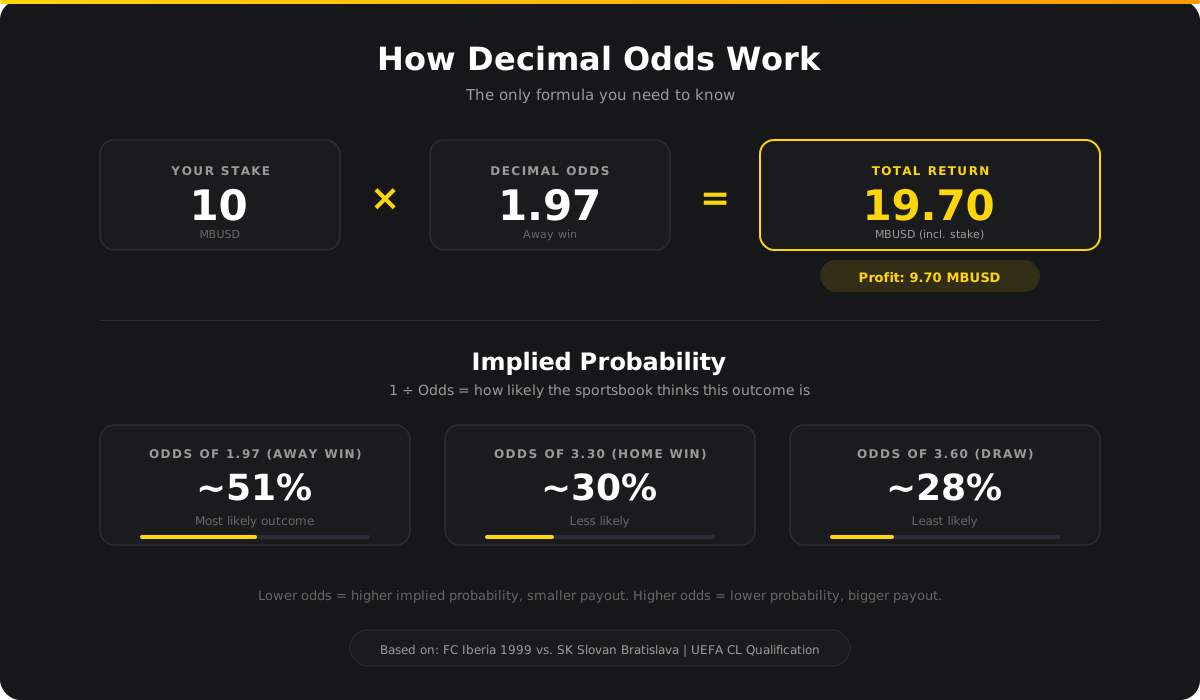
Most crypto sportsbooks, Minibet included, display odds in decimal format. Decimal odds are the most beginner-friendly format because the math is completely upfront: multiply your stake by the decimal number, and that's your total return if you win (your original stake included).
Here's a real example from a UEFA Champions League Qualification matchday:
Match Home (1) Draw (X) Away (2)
FC Iberia 1999 vs. SK Slovan Bratislava 3.30(1) 3.60(X) 1.97(2)
FC Thun vs. GNK Dinamo Zagreb 3.65(1) 3.55(X) 1.87(2)
This is a 1X2 market: the standard three-way football market offering a home win (1), a draw (X), or an away win (2). If you backed the away side in the first match at odds of 1.97 with a stake of 10 MBUSD, a winning bet returns 10 × 1.97 = 19.70 MBUSD total (your 10 MBUSD stake plus 9.70 MBUSD profit).
A quick way to read decimal odds at a glance: anything above 2.00 means the potential payout is more than double your stake. Anything below 2.00 means the market sees that outcome as the more probable one, but the payout relative to stake is smaller.
There's a second layer worth understanding once the basic multiplication clicks. Decimal odds aren't just a payout multiplier; they're also the sportsbook's way of expressing how likely it considers an outcome to be. You get the implied probability by dividing 1 by the decimal odds:
Odds of 1.97 → 1 ÷ 1.97 = ~51% implied probability Odds of 3.30 → 1 ÷ 3.30 = ~30% implied probability Odds of 3.60 → 1 ÷ 3.60 = ~28% implied probability
This matters because it lets you compare the price being offered against your own read of the match. If you think a team's true chance of winning is meaningfully higher than what the odds imply, that's the kind of gap experienced bettors look for. If your read matches the market's, there's no edge either way, just a bet. Understanding implied probability is what separates someone who bets from someone who bets with intention.
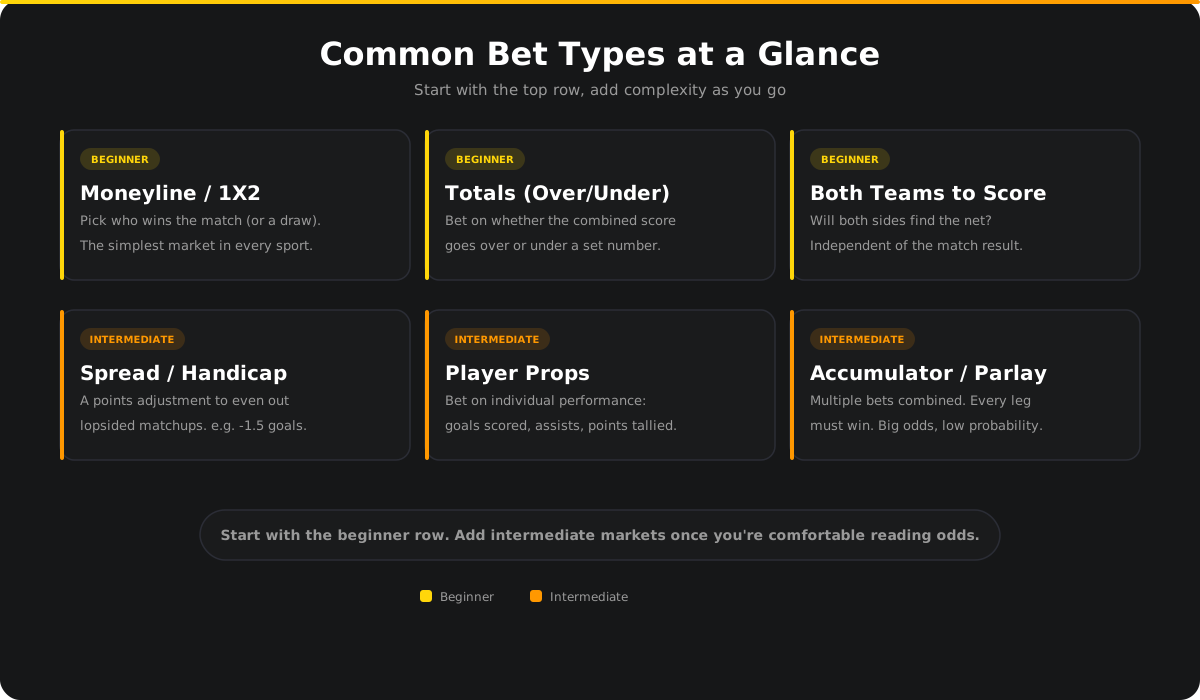
The 1X2 market is where most beginners start, but a handful of other bet types show up across almost every sport. Understanding them expands what you can bet on without adding much complexity:
Moneyline / 1X2 is the straight bet on who wins the match (or a draw, in sports where that applies). It's the simplest market and the one covered above.
Spread / Handicap betting applies a points or goals adjustment to even out a mismatched fixture. If a team is given a -1.5 handicap, they need to win by 2 or more for your bet to land. This is how sportsbooks make lopsided matchups interesting to bet on.
Totals (Over/Under) is a bet on whether the combined score goes over or under a set number. In football, "Over 2.5 goals" means you're betting on 3 or more goals being scored in total, regardless of who scores them.
Accumulator betting (also called parlays or multi-bets) combines multiple selections into one bet, where every leg has to win for the bet to pay out. The odds multiply together, so the potential payout looks enormous, but every added leg drops your overall chance of winning significantly. A four-leg accumulator at even modest odds on each leg will show a big multiplier on paper, but the combined probability of all four landing is a fraction of any single leg on its own. Accas are fun in small doses. They are not a strategy.
Both Teams to Score (BTTS) is a football-specific market where you bet on whether both sides find the net, completely independent of who wins the match.
Player Props are bets on an individual player's performance rather than the match result: goals scored, points tallied, assists recorded. They require a different kind of research since you're evaluating a person, not a team.
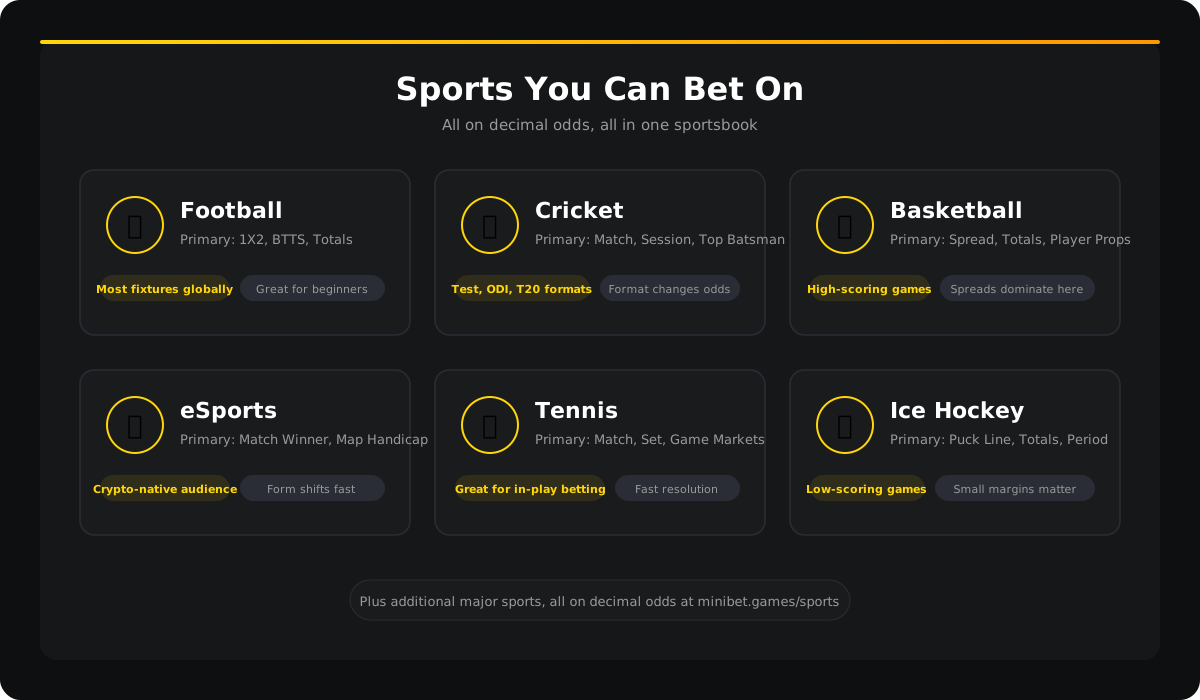
The sport you choose changes what "understanding the odds" actually means in practice, because each sport has its own dominant markets, rhythms, and quirks.
Football (Soccer) is the default entry point for most bettors worldwide, largely because the 1X2 market is so intuitive and the volume of fixtures is massive. League matches, cup ties, international qualifiers: there's almost always a football match to bet on.
Cricket runs on formats (Test, ODI, T20) that each carry different betting rhythms. Session totals and match-winner markets behave very differently in a five-day Test versus a three-hour T20. If you're a cricket fan, the format you follow most is the one you should start betting on, since your existing knowledge of the game is already an advantage.
Basketball and the NBA lean heavily on spreads and totals because outright moneylines on heavy favourites often carry unattractively low odds. The high-scoring nature of the game makes totals markets particularly active and interesting to follow.
eSports mirrors traditional match-winner and map-handicap markets, but demands a different kind of research. Roster changes, game patches, and meta shifts mean form can swing week to week far more dramatically than in traditional sports.
Tennis offers set-by-set and game-by-game markets alongside the match winner. For anyone who wants markets that resolve faster than a full match, tennis in-play betting is particularly engaging because the odds shift visibly after every game.
Ice Hockey runs on puck lines (the hockey equivalent of a spread), totals, and period-specific markets. The low-scoring nature of the game means small margins matter more in the odds.
In-play betting, sometimes called live betting, lets you place bets after a match has already started, with odds updating in real time as the action unfolds. A team down 0-1 at halftime will show longer odds to win than they did at kickoff. A set won in tennis shifts the in-play price for the match winner instantly.
The appeal is straightforward: you're reacting to what's actually happening rather than guessing beforehand. The catch is that in-play odds move fast, sometimes faster than the stream you're watching, because data feeds are usually a few seconds ahead of broadcast. If you're new to in-play betting, the smartest thing you can do is watch how the odds move for a few matches before you start betting into them. Observation first, action second.
In-play markets are available across virtually all major sports. Football, tennis, and basketball tend to offer the most active in-play odds movement because the scoring events are frequent enough to keep the market shifting throughout the match.
Before placing a single bet, decide on a bankroll: an amount you're comfortable allocating to betting, entirely separate from money earmarked for rent, bills, savings, or anything else. The bankroll is money you can afford to lose completely without it affecting your life. If the number you have in mind would hurt to lose, make it smaller.
From there, three habits keep beginners out of trouble:
Stake a consistent percentage per bet. A common starting reference point is somewhere between 1% and 3% of your total bankroll per bet. The exact number matters less than having one at all, rather than deciding your stake in the moment based on how confident you feel about a pick.
Track every bet. Wins and losses both, with the odds, the stake, and the outcome recorded. After a few weeks, you'll have an honest record of how you're actually doing rather than a memory that only holds onto the highlights. A simple spreadsheet works. Anything more complicated than that and you won't keep it up.
Set a stopping point. For both the session and the day. And actually stop when you hit it. This is the simplest rule and the hardest one to follow, which is exactly why it matters.
No staking method guarantees anything. Betting outcomes are inherently uncertain and no system changes that. What good bankroll habits do is keep the activity sustainable and enjoyable, rather than something that spirals past what you intended to spend.
Minibet runs a full crypto sportsbook alongside its casino, covering football, cricket, basketball, tennis, eSports, ice hockey, and a wide spread of other major sports, all on the decimal odds format explained above.
The platform operates on a no KYC crypto casino model, meaning you can go from sign-up to your first bet without a verification queue slowing you down. Deposits and withdrawals run on crypto, and reward payouts across /promotions use MBUSD, Minibet's reward currency that converts 1:1 to USDT/USDC after wagering requirements are met.
If you're the kind of person who enjoys sports betting because of the competitive edge it involves, it's worth exploring what Minibet does beyond the sportsbook. The platform runs weekly crypto casino tournaments across Crash, Slots, Live Casino, and Fishing, where you're not just betting on outcomes, you're climbing a leaderboard against other players. Same competitive instinct, different format. If you've read through this guide and understand what is a crypto casino, the tournament layer is the natural next step.
What does "sports betting for beginners" actually mean? It means understanding the fundamentals before placing your first bet: how odds work, what markets are available, and how to manage a bankroll. You don't need experience or specialised knowledge to start, just a clear picture of the basics this guide covers.
What is the 1X2 market in football? 1X2 refers to the three possible outcomes in a football match: a home win (1), a draw (X), or an away win (2). It's the standard match-winner market and the most common football bet type worldwide.
Is in-play betting riskier than pre-match betting? It carries different risks. Odds move faster and the window to decide is shorter, which rewards close observation rather than snap decisions made on impulse. If you're new to it, watch a few matches of in-play odds movement before betting into them.
What is accumulator betting and should beginners try it? An accumulator (or parlay) combines multiple selections into one bet where every leg must win. The combined odds look attractive, but each added leg drops your overall probability of winning. They're fine as occasional fun bets in small stakes, but they shouldn't be the core of any beginner's approach.
How much should I bet per game? There's no single right answer, but a commonly referenced starting point is 1% to 3% of your total bankroll per bet. The important thing is consistency: decide on a percentage and stick to it rather than varying your stake based on how confident you feel about a particular pick.
Do I need to understand every bet type before I start? No. Start with the match-winner (1X2 or moneyline) market, get comfortable reading decimal odds, and add other bet types gradually as you build confidence. Most experienced bettors still place the majority of their bets in straightforward markets.
Gambling should be fun. If it stops feeling that way, help is available. Visit BeGambleAware.org or call the National Gambling Helpline on 0808 8020 133 for free, confidential support. 18+.
This content is for informational purposes only. Betting involves financial risk. Please play responsibly.