


Every sport available on a sportsbook is technically open to beginners, but some are genuinely easier to get started with than others. The difference comes down to three things: how simple the main markets are, how often there are fixtures to bet on, and how much existing knowledge you need before a bet feels informed rather than random. This guide covers the most beginner friendly sports betting options and explains what makes each one a good starting point for someone new to sports betting for beginners.
If you haven't read the sports betting guide yet, start there. It covers how decimal odds work, what the common bet types are, and how to manage a bankroll. Everything below assumes you're comfortable with that foundation.
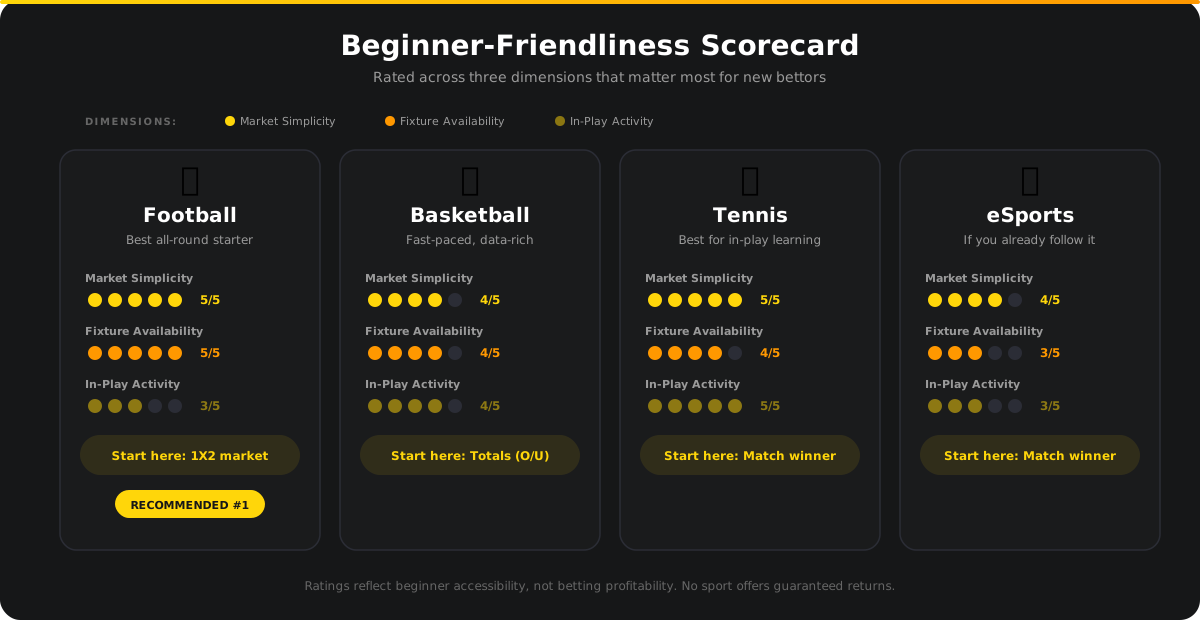
Football is the default entry point for a reason. The 1X2 market (home win, draw, away win) is as simple as betting gets: three possible outcomes, clearly priced, no handicaps or spreads to calculate. You look at two teams, pick a result, and the odds tell you what you'll get back if you're right.
Beyond simplicity, football has volume going for it. Between domestic leagues, international competitions, and qualification rounds, there are fixtures running almost every day of the week across different time zones. That means you're never short of matches to watch, research, or bet on, and more fixtures means more low-stakes practice opportunities before you commit to anything meaningful.
The easiest markets to start with are 1X2 (match result), Over/Under 2.5 goals, and Both Teams to Score. All three require minimal technical knowledge beyond understanding which two teams are playing and how they've been performing recently. Once you're comfortable there, football also lends itself well to accumulator betting since the high fixture volume gives you plenty of legs to choose from, though the usual acca probability warnings still apply.
Why it's beginner-friendly: The most intuitive main market in sports betting, the highest fixture volume of any sport, and a massive amount of publicly available form data to inform your picks.
Basketball, and the NBA in particular, is a strong second option for beginners. Games are high-scoring and fast-paced, which means the markets resolve quickly and the action is constant. You don't need to wait 90 minutes for a 0-0 draw to play out.
The dominant markets in basketball are spreads (point handicaps) and totals (over/under on combined points). Spreads can feel slightly more complex than a straight match-winner bet, but the concept is simple once you see it in practice: if a team is favoured by -5.5 points, they need to win by 6 or more for your spread bet to land. Totals are even more accessible because you're just betting on whether the combined score goes over or under a number, which makes them a good entry point before you move to spreads.
The NBA season also runs on a predictable, well-covered schedule with games almost every night during the regular season, and the amount of publicly available stats (player averages, team pace, recent form) makes it one of the easiest sports to bet on when it comes to finding data to inform a decision.
Why it's beginner-friendly: High-scoring games make totals intuitive, the NBA schedule provides consistent betting opportunities, and the depth of publicly available stats supports informed decision-making.
Tennis is underrated as a beginner sport for betting. Most tennis markets are two-outcome (one player wins, the other loses, no draw), which removes a variable that exists in football and makes the odds structure slightly simpler. You're always picking between two sides.
Where tennis really shines is in-play betting. Because the match is structured in sets and games, the odds shift visibly after every game won or lost. That means you can watch a match unfold, get a feel for momentum and form, and bet into the live odds with more information than you had pre-match. If in-play betting interests you, tennis is arguably the best sport to learn it on because the scoring structure creates natural, frequent odds-movement moments.
The main markets for beginners are match winner, set winner, and total games (over/under). All three are straightforward and available across virtually every ATP, WTA, and Grand Slam fixture.
Why it's beginner-friendly: Two-outcome markets simplify decision-making, in-play betting is unusually engaging because odds shift after every game, and fixtures run almost year-round across the global tour calendar.
eSports might not be the first sport that comes to mind for a beginner bettor, but for anyone who already follows competitive gaming it's one of the most natural entry points. If you watch CS2, League of Legends, Dota 2, or Valorant, you already have the game knowledge that most new bettors in traditional sports spend months building.
The core markets mirror traditional sports: match winner and map handicaps (the eSports equivalent of a spread) are the two most common. Map handicaps work the same way as point spreads in basketball, applied to the number of maps won rather than points scored.
The catch with eSports is that form is less stable than in traditional sports. Roster changes, game patches, and meta shifts can swing a team's performance from one week to the next in ways that don't happen when the rules of the game stay constant. That means recent form matters more than historical performance, and staying current on roster news is part of the research.
Why it's beginner-friendly (if you already follow eSports): Your existing game knowledge is a genuine edge, the core market types are simple, and the community publishes match analysis and roster updates constantly.
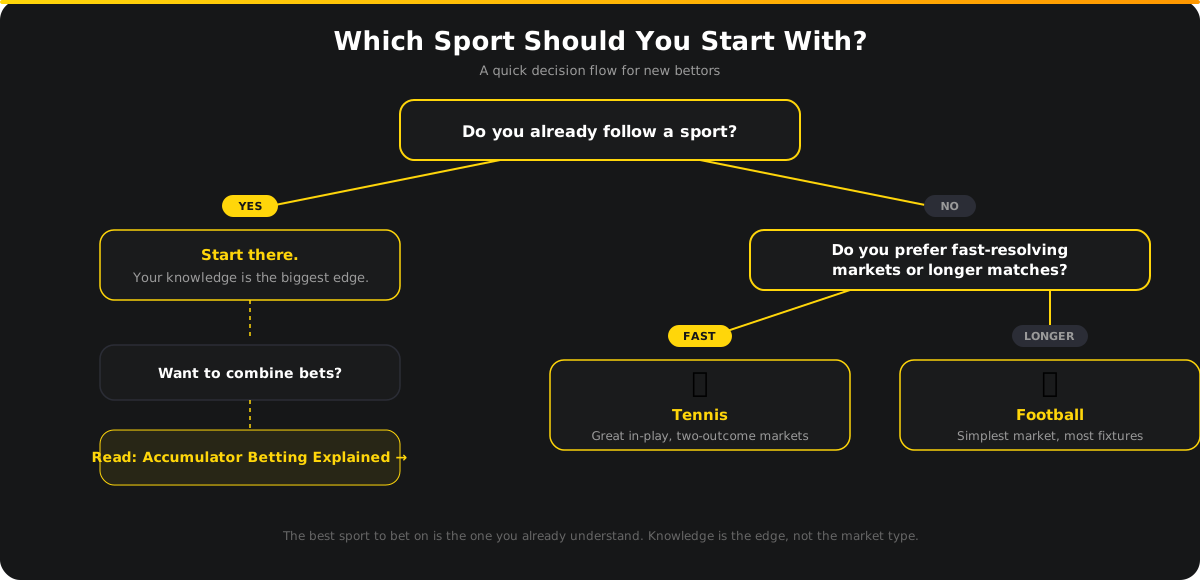
The honest answer: whichever sport you already follow. The single biggest advantage a beginner can have is existing knowledge of the teams, players, and dynamics at play. A football fan betting on football will always make more informed decisions than the same person betting on tennis for the first time, regardless of how "simple" the tennis market structure is.
If you don't follow any sport closely, football is the safest default because the 1X2 market is the most intuitive and the fixture volume gives you the most practice opportunities. Tennis is a strong second choice if you want to try in-play betting early on, since the set-by-set structure makes live odds movement easier to follow than in any other sport.
Whatever you pick, keep stakes low while you learn, track your bets from day one, and resist the urge to spread across multiple sports before you're confident in one. Minibet's /sports sportsbook covers all four of these sports (plus cricket, ice hockey, and more), so you can explore different markets as your confidence grows without leaving the platform.
And if the competitive side of sports betting appeals to you more than the outcome itself, the crypto casino tournaments running across Minibet's casino side offer a leaderboard-based format where the competition is the point, not just the individual bet.
What is the easiest sport to bet on for beginners? Football is generally considered the easiest sport to bet on because the 1X2 (match result) market is the most intuitive in sports betting. Three outcomes, clearly priced, no handicaps to calculate.
Is sports betting for beginners difficult to learn? The basics (how odds work, what the common markets are, how to manage a bankroll) can be learned in an afternoon. Developing the judgement to make consistently informed picks takes longer, which is why starting with a sport you already follow gives you a head start.
What is the best sport to bet on to make money? No sport offers a reliable way to make money through betting. Every sportsbook builds a margin into its odds, which means the house has a mathematical edge across all sports. The best approach is to treat sports betting as entertainment with a fixed budget, not as an income source.
Should I bet on multiple sports at once? Not at the start. Focus on one sport until you're confident reading the odds, understanding form, and tracking your results. Spreading across multiple sports too early usually means making less informed bets across all of them rather than better bets in one.
Is in-play betting good for beginners? It depends on the sport. In tennis, where odds shift after every game, in-play betting is a strong learning tool because you can watch momentum and odds move together in real time. In faster-moving sports, beginners may find in-play odds move too quickly to bet into comfortably at first.
Gambling should be fun. If it stops feeling that way, help is available. Visit BeGambleAware.org or call the National Gambling Helpline on 0808 8020 133 for free, confidential support. 18+.
This content is for informational purposes only. Betting involves financial risk. Please play responsibly.