Blackjack is a card game where you try to get a hand value closer to 21 than the dealer, without going over. That's the entire objective in one sentence. It's one of the most popular online casino games in the world, and for good reason: the blackjack rules are simple enough to learn in five minutes, but the strategy underneath them is deep enough to keep players engaged for years. This guide is built for complete blackjack for beginners, covering everything from card values to when to hit or stand, so you can sit down at a table (physical or digital) and actually know what you're doing.
The goal is not to get as close to 21 as possible. That's the most common misconception new players have, and it leads to bad decisions. The goal is to beat the dealer. Sometimes that means holding on 15 because you think the dealer is likely to bust. Sometimes it means hitting on 16 because the dealer's showing a strong card. Every decision is relative to what the dealer has, not just what you have.
If your hand goes over 21, you bust, and you lose immediately regardless of what the dealer does next. If the dealer busts and you haven't, you win. If neither side busts, the hand closer to 21 takes the pot.
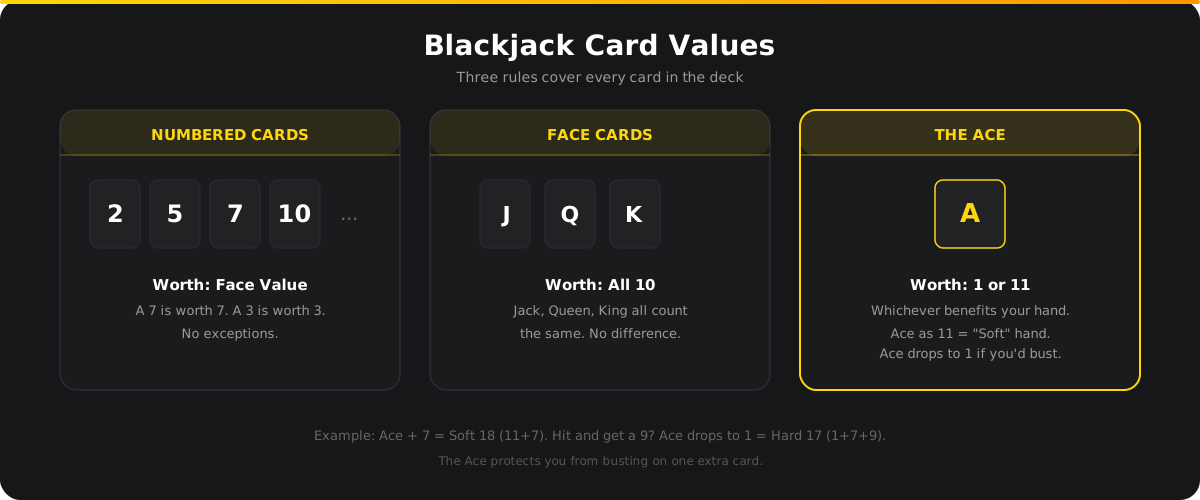
Every card in the deck has a fixed value, and there are only three rules to remember:
Numbered cards (2 through 10) are worth their face value. A 7 is worth 7. A 3 is worth 3. No exceptions.
Face cards (Jack, Queen, King) are all worth 10. It doesn't matter which one you're holding; they all count the same.
The Ace is the only card with a flexible value: it's worth either 1 or 11, whichever benefits your hand. A hand with an Ace counted as 11 is called a "soft" hand (because it can't bust on the next card, the Ace just drops to 1). A hand without a flexible Ace is called a "hard" hand.
So if you're dealt an Ace and a 7, that's a soft 18 (11 + 7). If you then hit and receive a 9, the Ace drops to 1, giving you a hard 17 (1 + 7 + 9) instead of 27 (which would be a bust). The Ace protects you.
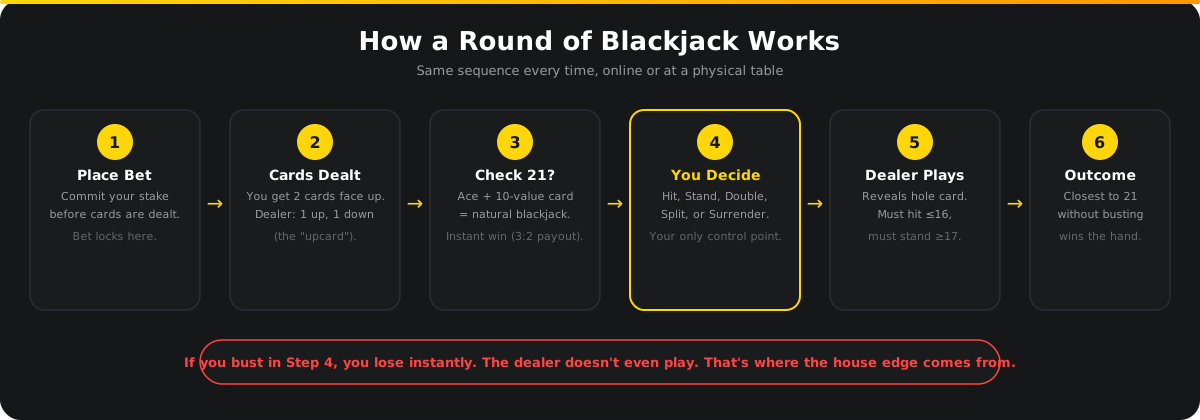
Every round follows the same sequence, whether you're playing at a physical table or on a live dealer stream. Here's the step-by-step:
Step 1: Place your bet. Before any cards are dealt, you commit your stake. Once the cards start coming, the bet is locked.
Step 2: Cards are dealt. You receive two cards face up. The dealer receives two cards as well, one face up (the "upcard") and one face down (the "hole card"). Everything you decide from this point is based on your two cards versus the dealer's visible upcard.
Step 3: Check for blackjack. If your first two cards total exactly 21 (an Ace plus any 10-value card), that's a "natural blackjack," and you win immediately at a higher payout (typically 3:2 or 6:5, depending on the table rules). If the dealer also has a natural blackjack, it's a push (tie) and your bet is returned.
Step 4: Make your decisions. If neither side has a natural blackjack, you choose what to do with your hand. Your options are covered in detail in the next section.
Step 5: The dealer plays. Once you've finished making decisions, the dealer reveals their hole card and plays according to fixed house rules. The dealer has no choices: they must hit on 16 or below and stand on 17 or above (some tables require dealers to hit on soft 17, which slightly increases the blackjack house edge).
Step 6: Outcome. Hands are compared. Closest to 21 without busting wins. If you bust during Step 4, you've already lost before the dealer even plays, which is where the house edge fundamentally comes from.
Once you've seen your two cards and the dealer's upcard, you have up to five possible actions depending on the table rules:
Hit means you ask for another card. You can hit as many times as you want until you either stand or bust. If your hand is low (say, a hard 8), hitting is almost always the right call because there's no risk of busting on the next card.
Stand means you keep your current hand and end your turn. The dealer then plays. Standing is the right move when your hand is strong enough that the risk of busting outweighs the potential benefit of another card.
Double down means you double your original bet and receive exactly one more card, no more. This is a powerful move when the maths favours you. The classic double down blackjack scenario: you're holding an 11 and the dealer is showing a 6 (a weak upcard). The odds of drawing a 10-value card to hit 21 are high, and the dealer is likely to bust from 16. You want maximum money on the table in that moment.
Split is available when your first two cards are a pair (two 8s, two Aces, etc.). You separate them into two independent hands, each with its own bet equal to your original. Some pairs should always be split (Aces and 8s); some should never be split (10s and 5s). Knowing which is which is part of basic blackjack strategy.
Surrender (where available) lets you forfeit half your bet and fold the hand before playing. It's rarely offered online, but when it is, it's the correct play in a handful of specific situations (like holding a hard 16 against the dealer's 10).
Blackjack strategy isn't about gut feeling or lucky streaks. There's a mathematically optimal play for every possible combination of your hand versus the dealer's upcard, and it's been calculated and verified millions of times over. Following it won't guarantee you win any individual hand, but it minimises the blackjack house edge to roughly 0.5%, making blackjack one of the lowest-edge casino games available.
Here's a simplified framework that covers the majority of hands a beginner will face:
Hard hands (no flexible Ace): When your total is 8 or below, always hit. There's zero risk of busting, and standing on a low total is almost never correct.
When your total is 17 or above, always stand. The risk of busting on any card above 4 is too high, and 17+ is already a competitive hand.
When your total is between 9 and 16, your decision depends on the dealer's upcard. This is where the game gets interesting. If the dealer is showing a weak card (2 through 6), they're more likely to bust, so you can afford to stand on lower totals (12-16) and let the dealer take the risk. If the dealer is showing a strong card (7 through Ace), they're likely to make 17+, so you need to hit and try to improve even at the risk of busting.
Soft hands (Ace counted as 11): Soft hands give you a safety net because you can't bust on one hit (the Ace just drops to 1). General rule: hit soft 17 or below, stand on soft 19 or above, and with soft 18 you'll sometimes hit, sometimes stand, depending on the dealer's upcard.
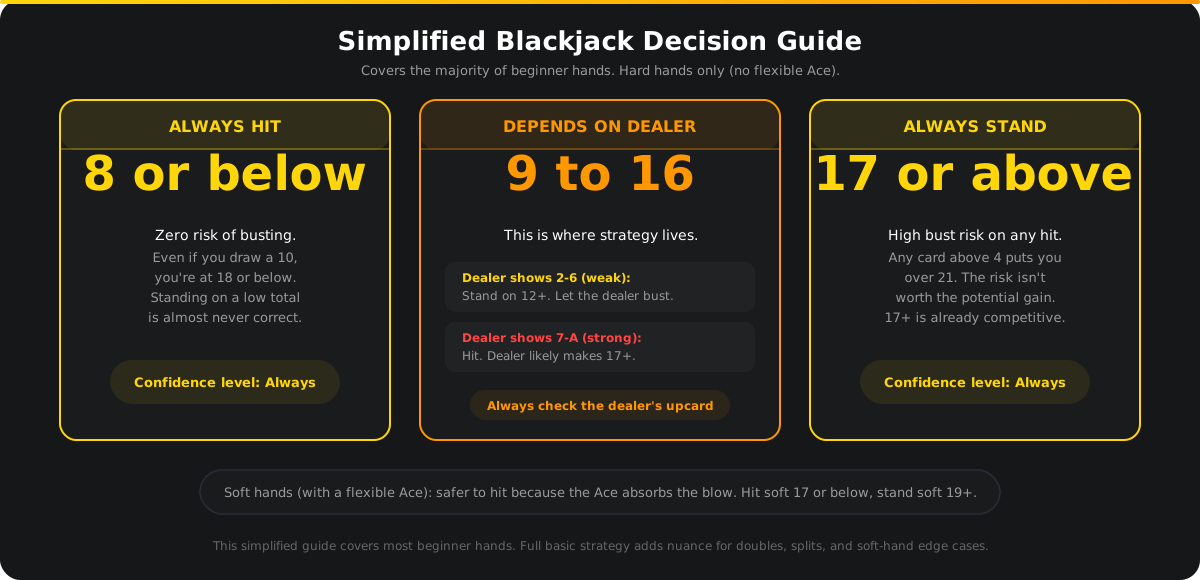
This simplified guide covers the vast majority of beginner hands. The full basic strategy chart adds nuance for doubles, splits, and edge-case soft hands, but what's above is enough to play with significantly better odds than someone going on instinct.
Playing to "get 21." The goal is to beat the dealer, not to reach 21. Plenty of hands are won on 13, 14, 15 when the dealer busts. Chasing 21 leads to unnecessary hits and unnecessary busts.
Standing on 12-16 regardless of the dealer's card. New players often freeze on anything above 11 because they're scared of busting. But if the dealer is showing a 10, your 14 is not a strong hand. Hitting is scary but mathematically correct.
Ignoring the dealer's upcard. Your hand doesn't exist in isolation. A hard 16 against the dealer's 6 is a completely different situation than a hard 16 against the dealer's 10. Every decision should be relative.
Taking insurance. Insurance is a side bet offered when the dealer's upcard is an Ace. It pays 2:1 if the dealer has blackjack, but the maths never favours the player on this bet. Basic strategy says always decline insurance, regardless of your hand.
Not understanding the RTP of the table. Different blackjack variants have different RTPs based on rule variations (dealer hits or stands on soft 17, 3:2 vs 6:5 natural payouts, number of decks). Checking the RTP before sitting down is free edge.
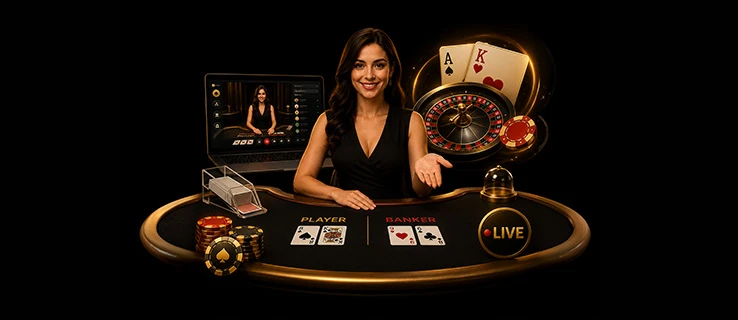
Minibet offers live dealer blackjack streamed in real time, meaning you're playing against a real dealer on a real table with real cards, just through a screen. The rules are identical to what's covered above. The interface shows your cards, the dealer's upcard, and your available actions (hit, stand, double, split) as clickable buttons, so you never have to worry about hand signals or table etiquette.
Where it gets more interesting is the competitive layer. Minibet's live casino tournaments include a blackjack rotation as part of the weekly Live Casino Circuit, where your blackjack sessions contribute to a tournament leaderboard. That means you're not just playing against the dealer for individual hand outcomes, you're competing against other players for a share of a weekly prize pool. It's the same game, but with the added dimension of crypto casino tournaments running on top of it.
Is blackjack for beginners hard to learn? The core rules take about five minutes. Bet, get closer to 21 than the dealer, don't bust. Basic strategy adds a layer of decision-making, but a simplified version (covered above) is enough to play well from your first session.
What is the blackjack house edge? With perfect basic strategy, the house edge on a standard blackjack game is roughly 0.5%, one of the lowest in any casino game. Without strategy (playing on gut feel), the edge can climb to 2% or higher depending on how many suboptimal decisions you make.
When should I hit or stand? The short version: always hit hard 8 or below, always stand hard 17 or above, and for everything in between, check the dealer's upcard. Dealer showing 2-6 (weak), lean toward standing. Dealer showing 7-Ace (strong), lean toward hitting. The full basic strategy chart refines this further, but that framework covers most hands correctly.
What does double down mean in blackjack? Double down blackjack means you double your bet and receive exactly one more card. You can't hit again after doubling. The classic scenario: you're holding 11 and the dealer shows a weak upcard. The odds of landing a 10-value card to reach 21 are high, so you want maximum stake on the table.
Can I count cards in online blackjack? Not effectively. Online and live dealer blackjack typically uses continuous shuffle machines or deep shoe penetration with frequent shuffles, which removes the conditions card counting relies on. This guide focuses on basic strategy, which is the optimal approach for online play.
Is online blackjack rigged? Reputable online blackjack games use certified RNG (random number generator) software or live dealers with physical cards, both of which are independently audited. The house edge is built into the rules, not hidden manipulation. Understanding the what is RTP of a table tells you exactly what the expected return is.
Gambling should be fun. If it stops feeling that way, help is available. Visit BeGambleAware.org or call the National Gambling Helpline on 0808 8020 133 for free, confidential support. 18+
This content is for informational purposes only. Betting involves financial risk. Please play responsibly.