-desktop-image-iounss.webp)
-mobile-image-hg2pja.webp)
Slot volatility (also called variance) describes the pattern of how a slot pays out, not the amount. Two slots can have the exact same RTP, the exact same house edge, and the exact same long-run expected return, but feel completely different to play because one is designed to pay small amounts frequently and the other is designed to pay large amounts rarely. That difference is volatility, and understanding it is the single most useful thing you can learn about slots after how online slots work and what is RTP.
This guide breaks down what slot variance explained actually means, how high vs low variance slots differ in practice, and how to choose the right volatility level for your bankroll, your patience, and your session goals. None of this changes the maths of the house edge. What it changes is your experience: how a session feels, how long your balance lasts, and whether the game matches what you actually came to do.
##What Slot Volatility Actually Means
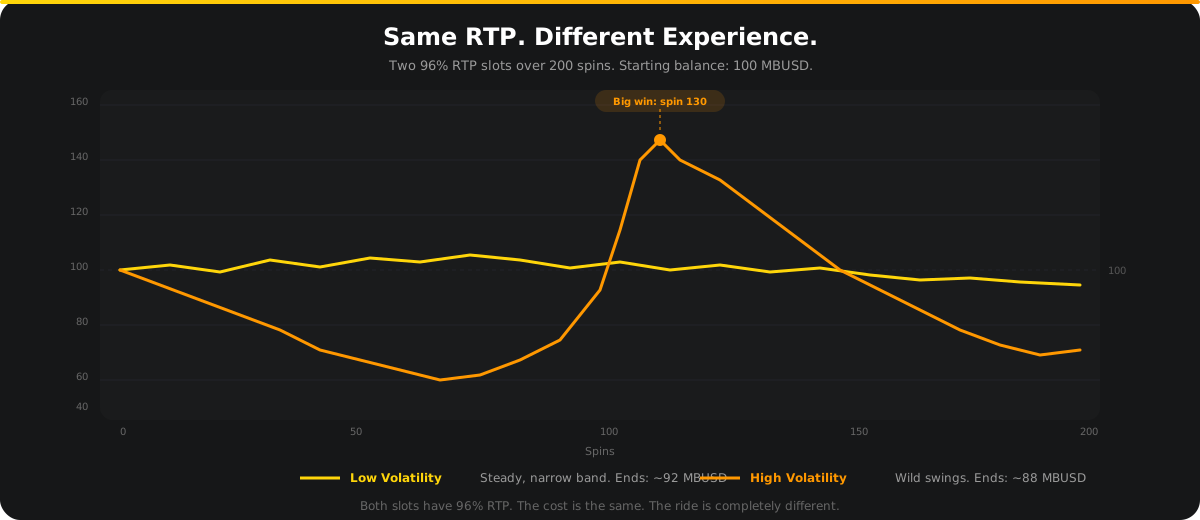
Imagine two slot machines, both with 96% RTP. Over millions of spins across all players, both will return 96 USD for every 100 USD wagered. The house edge is identical. But here's how your session might play out differently on each:
**Slot A (low volatility): **You spin 100 times. You hit small wins on 30-40 of those spins. Most wins are between 0.5x and 3x your bet. Your balance gently fluctuates around your starting point. After 100 spins, you're down maybe 5-10% of your starting balance. The session felt steady, predictable, and long.
Slot B (high volatility): You spin 100 times. You hit wins on maybe 10-15 of those spins. Most of those wins are small, but buried in there is one win at 50x your bet that spiked your balance above your starting point. You also went through a 40-spin stretch where you won absolutely nothing. After 100 spins, you might be up, down, or roughly even. The session felt erratic, tense, and nothing like Slot A.
Both slots have 96% RTP. The house edge is the same. The cost of playing is the same over time. But the experience is radically different because the volatility is different. Slot volatility is about the distribution of outcomes, not the total.
Think of it this way: RTP tells you what the slot costs to play over time. Volatility tells you what the ride feels like.
##How Volatility Feels in Practice
The reason slot volatility matters so much is that your session is never "millions of spins across all players." Your session is 50, 100, maybe 200 spins. And in that window, volatility determines almost everything about your experience.
On low volatility slots, the RTP converges relatively quickly. You get enough wins, often enough, that the mathematical average has a chance to manifest even in a short session. Your balance bounces around within a narrow band. The downside: those wins are almost always small. You rarely see a payout that makes your heart rate change.
On high volatility slots, the RTP takes much longer to converge because the outcomes are concentrated into fewer, larger events. Your session might be entirely below your starting balance for most of its duration, until a single bonus round or a single high-paying combination pulls everything back (or doesn't). The upside: when it hits, it hits. The downside: "when" might be 300 spins away, and your bankroll might not survive the wait.
This is also why high volatility slots are sometimes called "volatile slots" in player communities. The word captures the emotional reality: the experience swings, and the swings are the point.
##The Three Volatility Tiers
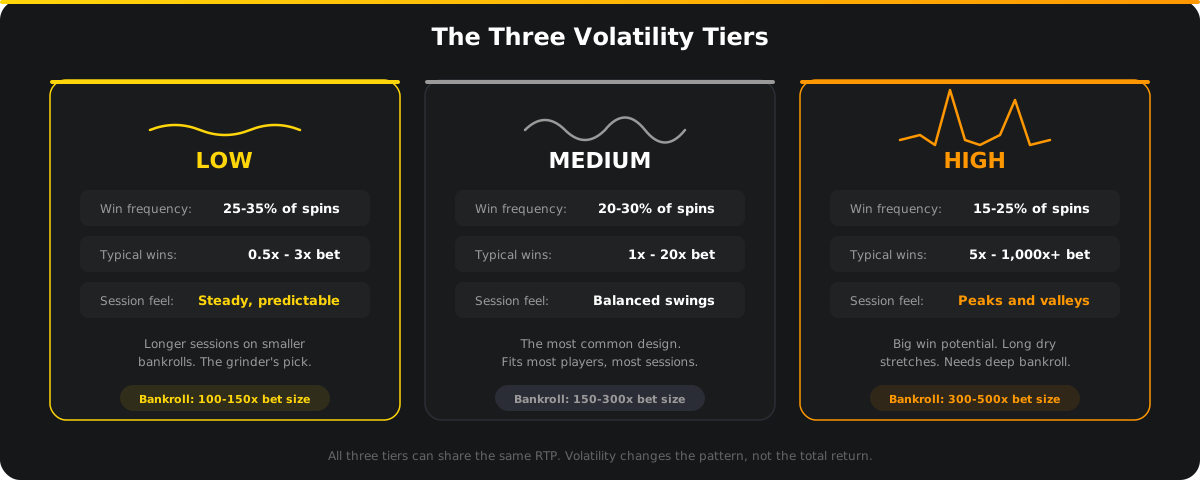
Most slot providers categorise their games into three volatility levels. Some use a five-tier scale, but the core distinction breaks down into three:
Low Volatility Slots
Low volatility slots are designed for frequent payouts. You'll hit winning combinations often, sometimes on every two or three spins, but the individual payouts are small relative to your bet. The base game does most of the work, and bonus features (when triggered) tend to pay modest, consistent amounts rather than explosive jackpots.
Session character: Steady, predictable, gently declining unless you trigger a bonus. Your balance stays within a relatively narrow range of your starting point. Sessions last longer per unit of bankroll because wins constantly replenish what you're spending.
Best for: Players who want to play for a longer period on a fixed budget. Players who enjoy the rhythm of spinning rather than the adrenaline of high-risk moments. Players who find long losing streaks frustrating.
Typical hit frequency: 25-35% of spins produce a win (including wins smaller than your bet).
Medium Volatility Slots
Medium volatility slots sit in the middle. They offer a balanced mix of frequent small wins and occasional larger payouts. Most mainstream slots fall into this category because it's the broadest-appeal design: enough small wins to keep sessions alive, enough variance to keep them interesting.
Session character: Moderate swings. You'll go through short dry stretches (10-20 spins without a meaningful win) balanced by periods where several wins cluster together. Bonus features are more impactful than in low-volatility games but fire less often.
Best for: Most players, most of the time. Medium volatility is the default for a reason: it balances entertainment value, session length, and payout potential without pushing any of those to extremes.
Typical hit frequency: 20-30% of spins produce a win.
High Volatility Slots
High volatility slots concentrate their payouts into rare, large events. The base game pays infrequently, and many of those base game wins are smaller than your bet (technically a "win" but a net loss for the spin). The real payouts come from bonus features, especially free spin rounds with multipliers, which can deliver 100x, 500x, or even 1,000x+ your bet in a single event.
Session character: Long dry stretches punctuated by dramatic spikes. You might go 50-80 spins without a meaningful win, watching your balance steadily decline, and then hit a bonus round that returns everything and more. Or the bonus doesn't come, and your session ends below your starting point. The swings are large in both directions.
Best for: Players who want the chance at a genuinely large win and are comfortable with the reality that most sessions will end negative. Players with a larger bankroll relative to their bet size (because the dry stretches demand it). Players who find steady small wins boring.
Typical hit frequency: 15-25% of spins produce a win.
##Slot Volatility vs RTP: They're Not the Same Thing
This distinction is worth its own section because it's the most common source of confusion in slot education. Volatility and RTP measure different things, and mixing them up leads to bad decisions.
RTP (Return to Player) is the total percentage of all wagered money that a slot returns over its lifetime. A 96% RTP slot returns 96 USD per 100 USD wagered over millions of spins. It tells you the mathematical cost of playing the game. Higher RTP = lower house edge = less expensive over time.
Volatility describes how that return is distributed across individual spins. It tells you nothing about the total return and everything about the pattern of returns.
Here's where it matters practically:
A high volatility slot with 96% RTP and a low volatility slot with 96% RTP cost the same to play over time. The mathematical edge is identical. But the high volatility version will feel more expensive in most sessions because its return is concentrated into rare events that you might not experience in a given session.
A low volatility slot with 94% RTP costs more to play over time than a high volatility slot with 97% RTP, even though the low volatility version feels steadier. The steady feel is masking a higher house edge.
The lesson: check RTP first (it determines the actual cost), then choose volatility based on how you want the session to feel. Don't use volatility as a proxy for value. A "safe-feeling" low volatility slot with a bad RTP is worse value than a "risky-feeling" high volatility slot with a good RTP. For a full breakdown of how RTP works mechanically, the what is RTP guide covers it from first principles.
##How Volatility Interacts With Your Bankroll
Volatility isn't just an abstract preference. It has direct implications for how much bankroll you need to sustain a session.
Low volatility slots are forgiving on bankroll. Because wins come frequently, your balance is constantly being topped up, even if each individual top-up is small. A session of 200 spins on a low volatility slot might only require a bankroll of 100-150x your bet size to be reasonably confident of reaching that many spins.
High volatility slots are demanding on bankroll. Because wins are rare, you need enough reserves to survive the dry stretches between them. A session of 200 spins on a high volatility slot might require a bankroll of 300-500x your bet size or more to have a reasonable chance of reaching the bonus features where the big payouts live.
This is why bet sizing matters more on volatile slots. If your bankroll is 50 USD, playing a high volatility slot at 1 USD per spin means you have maybe 50 spins before you're out. That might not be enough to trigger a single bonus round. The same 50 USD on a low volatility slot at 0.20 USD per spin gives you 250 potential spins, which is a full session with plenty of room for the game's maths to play out.
The maths doesn't change. The RTP is the same. But the experience of running out of bankroll before the game "pays back" is entirely a volatility problem, not an RTP problem.
##Volatility in Tournaments: A Different Calculation
If you're playing slots within Minibet's crypto slots tournament format, volatility takes on a slightly different dimension. In a tournament, you're competing against other players on a leaderboard, and what matters is your accumulated score relative to others, not just your individual session profit.
In this context, high volatility slots can be strategically interesting because a single large multiplier hit can catapult you up the leaderboard in a way that steady small wins on a low volatility slot can't replicate. But the same logic applies in reverse: the variance that can send you to the top can also leave you at the bottom if the bonus never triggers.
Low volatility slots in tournaments tend to produce middle-of-the-pack results: consistent, competitive, but rarely leaderboard-topping. The choice between volatility in a tournament context is genuinely strategic in a way that it isn't in standard play, where it's purely about preference.
##Choosing Your Volatility: What Fits You?
The right volatility isn't about which is "better." It's about matching the game's design to your session goals, your bankroll, and your tolerance for losing streaks.
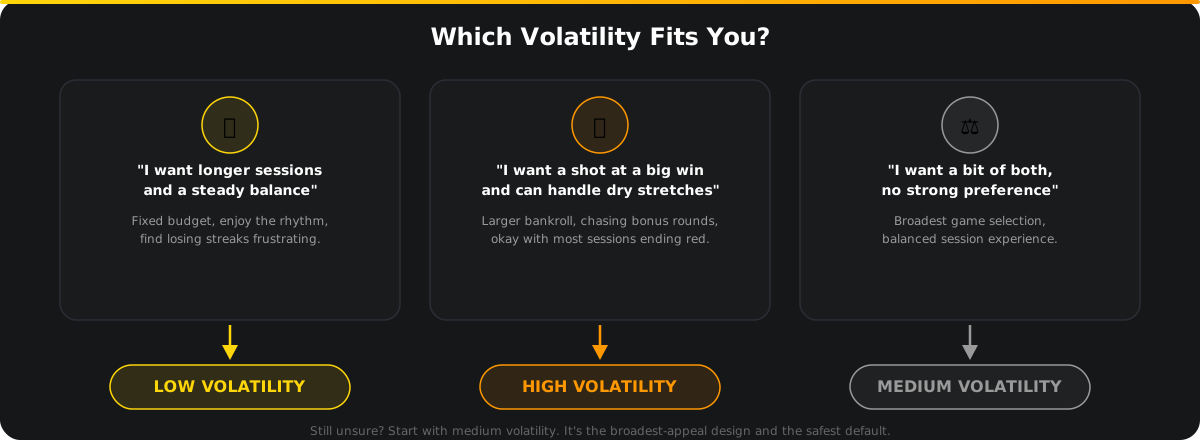
Choose low volatility if: you're playing on a fixed budget and want to maximise session length. You enjoy the rhythm of frequent wins more than the prospect of a single big payout. You find long losing streaks frustrating rather than exciting. You're playing casually and want a predictable, steady experience.
Choose medium volatility if: you want a balanced session with both regular wins and the occasional meaningful payout. You don't have a strong preference either way and want the broadest range of game options (most slots are medium volatility).
Choose high volatility if: you're specifically chasing the chance at a large multiplier win. You have a bankroll large enough to absorb extended dry stretches without running out. You find steady small wins boring and want the session to have genuine peaks and valleys. You understand that most sessions on high volatility slots will end negative, and you're okay with that.
If you've played crash games, the volatility choice in slots maps loosely to the cash-out target concept in crash: low targets = frequent small wins = low volatility. High targets = rare big wins = high volatility. The parallel isn't perfect (in crash you control your volatility per round; in slots it's fixed by the game), but the risk-reward trade-off feels similar.
##Where to Find Volatility Information
Most slot providers publish volatility ratings in the game's info or paytable screen. Look for labels like "Volatility: High" or a scale (1-5 stars, Low/Medium/High). If the game doesn't display it directly, a quick search of the game name plus "volatility" will usually surface the information from review sites or the provider's game sheet.
On Minibet, the game lobby carries slots from 40+ providers across all volatility levels, from low-variance daily grinders to high-variance bonus chasers. If you're still exploring the broader online casino games landscape, volatility is one of the most useful filters for narrowing down which slots to try first. Filtering by provider can also help narrow the field. Minibet Studios' own games are designed with accessible mechanics that span the volatility range, making them a good starting point for exploring how different volatility levels feel on the same platform.
##Frequently Asked Questions
What is the best volatility for slots? There's no objectively best volatility. Low volatility suits longer sessions on smaller bankrolls. High volatility suits players chasing large wins with bigger bankrolls. Medium suits most players most of the time. The "best" volatility is the one that matches your session goal and budget.
Does high volatility mean worse odds? No. Volatility is independent of RTP. A high volatility slot with 97% RTP has better long-run odds than a low volatility slot with 94% RTP. Volatility changes the pattern of payouts, not the total expected return. Always check RTP first.
Why do I keep losing on high volatility slots? Because high volatility slots concentrate their payouts into rare events. Most individual sessions on a high volatility slot will end below your starting balance. The big wins that pull the average up are infrequent, and you might not hit one in any given session. This is by design, not a sign the game is broken.
Can I tell a slot's volatility before playing? Usually, yes. Most slots display volatility in the paytable or info screen. If not, search the game name plus "volatility." Provider catalogues and review sites almost always list it.
What's the difference between slot volatility and variance? They mean the same thing. "Volatility" and "variance" are used interchangeably in the slots world. Some providers use one term, some use the other. The concept is identical: how spread out the payouts are around the average return.
Do medium volatility slots exist? Yes, and they're the most common category. Most mainstream slots from major providers (Pragmatic Play, Play'n GO, BGaming) fall into medium volatility. They're the default because they balance session length, win frequency, and payout potential without pushing any of those to extremes.
How much bankroll do I need for high volatility slots? A common reference point is 300-500x your bet size for a full session. If you're betting 0.20 MBUSD per spin, that's 60-100 USD as a session bankroll. This gives you enough spins to have a reasonable chance of triggering the bonus features where the big payouts live. Less bankroll means a shorter session and a higher chance of running out before the variance pays off.
Gambling should be fun. If it stops feeling that way, help is available. Visit BeGambleAware.org or call the National Gambling Helpline on 0808 8020 133 for free, confidential support. 18+.
This content is for informational purposes only. Betting involves financial risk. Please play responsibly.