



A live dealer casino is an online casino format where real human dealers operate physical tables, cards, and wheels in a professional studio, and the action is streamed to your device in real time via HD video. You watch the dealer shuffle, deal, and spin through a live video feed, and you place your bets through a digital interface overlaid on top of the stream. The result isn't generated by software. It's determined by the same physical mechanics as a land-based casino: a real ball landing in a real pocket, a real card being drawn from a real shoe.
This is what makes live dealer games fundamentally different from standard online casino games. In a traditional online casino game, a random number generator (RNG) produces the outcome. In an online live casino, a human dealer produces the outcome, and you watch it happen. The maths is the same. The house edge doesn't change. But the experience sits in a completely different place: it's social, it's paced by a real person, and the results are visually verifiable because you can see them happen with your own eyes.
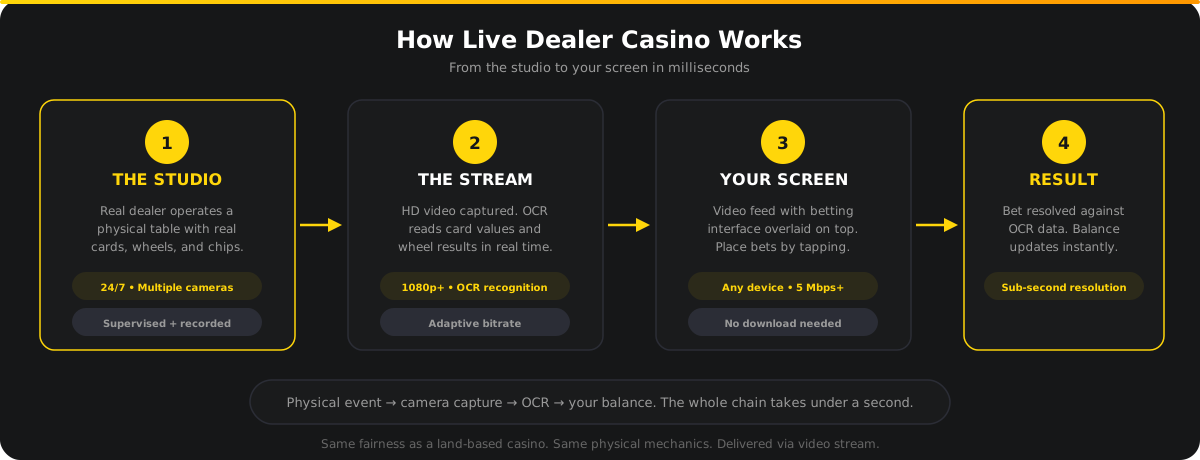
The live casino technology stack is more sophisticated than it looks from the player's side. What appears as a simple video of a dealer at a table is actually a multi-layered system designed to deliver real-time interactivity at broadcast quality. Here's what's happening behind the stream:
The studio. Live dealer games are operated from purpose-built studios designed to look and function like high-end casino floors. Multiple camera angles cover each table: a wide shot of the dealer and the table, close-ups of cards being dealt, overhead views of roulette wheels, and dedicated angles for the shoe or shuffle machine. The studios run 24/7, with dealers working in shifts, so tables are available around the clock regardless of your time zone.
Optical Character Recognition (OCR). This is the technology that bridges the physical and digital worlds. When a card is dealt, OCR cameras read the card value in real time and transmit it to the game server. When a roulette ball lands, sensors in the wheel detect the pocket number and relay it instantly. This means the digital interface on your screen updates within milliseconds of the physical event happening on the table. You see the card; the software knows the card; your bet is resolved, all in real time.
The video stream. The studio feeds are compressed and delivered via adaptive bitrate streaming, the same technology used by video platforms. The stream adjusts quality based on your connection speed, so you get the best possible picture without buffering. Most live dealer providers stream in 1080p as the baseline, with some offering 4K on select tables.
The betting interface. Your screen shows the video feed with a transparent betting interface layered on top. You place chips by tapping or clicking positions on the virtual table layout (exactly as you would in an RNG game), and your bets are transmitted to the game server. The dealer doesn't see your individual bet, they see the aggregate of all players' bets at the table, but the result of the physical event applies to your specific wager.
The game server. This sits between you and the studio, handling bet placement, bet resolution, and balance management. It receives the OCR data from the studio, compares it against all active bets, calculates payouts, and updates every player's balance simultaneously. The entire cycle, from the ball landing in a pocket to your balance updating, takes less than a second.
The live dealer format covers most major table games, plus a growing category of game-show-style experiences that don't have a direct equivalent in traditional casinos.
Live Blackjack
Live blackjack online is the closest experience to sitting at a physical blackjack table. A dealer deals real cards from a shoe, and you make your hit/stand/double/split decisions through the interface. The key difference from land-based play: multiple players can play the same table simultaneously (sometimes dozens on a single hand), each making independent decisions. Some tables offer "bet behind" functionality, letting you wager on another player's hand when the main seats are full.
The rules, card values, and basic strategy are identical to what's covered in the how to play blackjack guide. The live format doesn't change the maths, it changes the atmosphere.
Live Roulette
Live roulette features a real wheel, a real ball, and a real dealer making the spin. You watch the ball drop through the camera feed, and the result is captured by in-wheel sensors. All bet types (inside, outside, neighbour bets) are available through the digital layout. Some live roulette tables feature auto-roulette (no dealer, the wheel spins automatically) or immersive roulette with slow-motion replays of the ball drop.
Live Baccarat
Live baccarat plays exactly as described in the baccarat guide: you bet on Player, Banker, or Tie, and the dealer handles all drawing rules mechanically. The live format is popular in Asian markets, and many studios offer squeeze baccarat, where the dealer slowly reveals the cards by peeling them, adding a dramatic element that standard RNG baccarat doesn't have.
Live Poker
Live casino poker comes in several formats. The most common for live dealer are Casino Hold'em and Three Card Poker, both of which are played against the house (not against other players like traditional poker). The dealer deals, the player makes a single strategic decision (fold or play), and hands are compared.
Live Game Shows
This is the category that's unique to the live dealer format. Games like Crazy Time, Dream Catcher, Monopoly Live, and Lightning Dice combine wheel-of-fortune mechanics with bonus rounds hosted by a live presenter. They don't have a traditional casino table-game equivalent. They're designed for entertainment-first players who enjoy the spectacle and social energy of a live host more than the strategic depth of a table game.
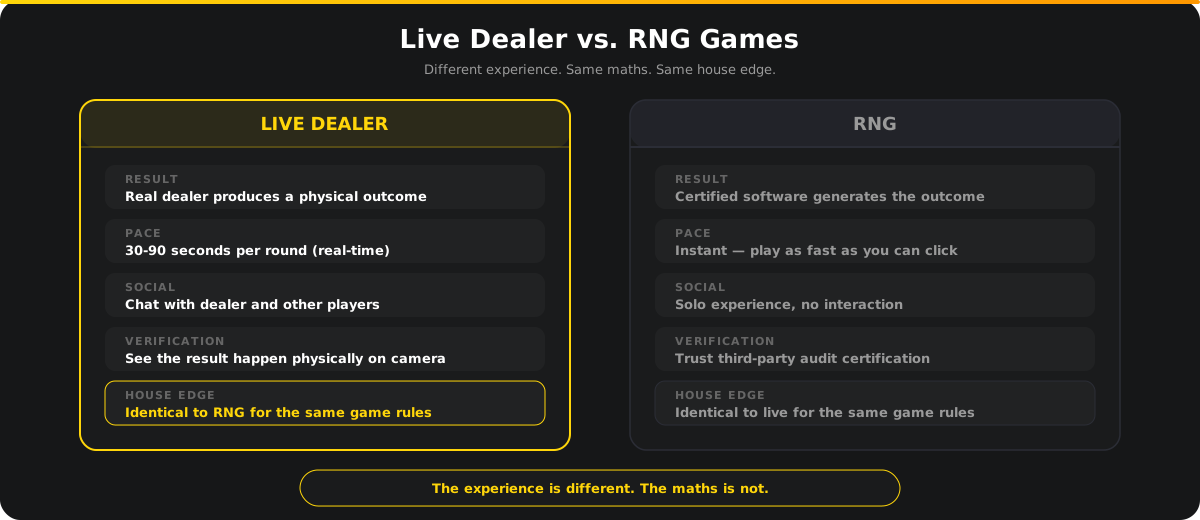
Both live dealer games and RNG games are legitimate, regulated, and fair. The difference is in how the result is produced and how the experience feels.
How the result is generated. In RNG games, a certified random number generator produces the outcome the instant you press the button. In live dealer games, a physical event produces the outcome: a real card dealt, a real wheel spun. Both are audited and regulated, but the mechanism is fundamentally different.
Pace. RNG games are instant. You spin, the result appears. You can play as fast as you can click. Live dealer games are paced by a real person. A blackjack hand takes 30-60 seconds. A roulette spin takes 60-90 seconds including the betting window. This slower pace is either a feature or a drawback depending on what you want from a session.
Social element. Most live dealer tables include a chat function where you can interact with the dealer and other players. The dealer often responds verbally. It's not the same as sitting at a table with five strangers, but it's meaningfully more social than an RNG game where you're entirely alone.
Transparency. In an RNG game, you trust the certification that the algorithm is fair. In a live dealer game, you can see the result happen in front of you. The card is physically dealt. The ball physically lands. This visible verification is a major reason some players prefer the live format, even though the mathematical fairness is identical in both.
Availability. RNG games are available 24/7 with no capacity limits. Live dealer tables can fill up during peak hours, and some games only run at certain times. This is increasingly less of an issue as providers add more tables, but it's a real difference during high-traffic periods.
House edge. Identical for the same game. Live blackjack has the same house edge as RNG blackjack (assuming the same rules). Live roulette has the same edge as RNG roulette (assuming the same wheel type). The delivery mechanism doesn't change the maths. For more on how house edge works across both formats, the what is RTP guide covers it from first principles.
The technical requirements are lighter than you might expect:
Device. Any modern smartphone, tablet, laptop, or desktop. Live dealer streams are optimised for mobile, and the betting interface scales to smaller screens. You don't need a gaming PC or a high-end device.
Internet connection. A stable connection of 5 Mbps or above is sufficient for smooth 1080p streaming. Wi-Fi is fine. Mobile data works, though it'll consume more data than non-video casino games (roughly 300-500 MB per hour of play depending on stream quality).
Account and funds. A Minibet account with a funded balance. No special software downloads or plugins needed. Live dealer games run directly in the browser or app alongside all other online live casino games on the platform.
Time. Because live dealer games are paced by a real person, sessions take longer per hand/spin than RNG equivalents. A 30-minute live blackjack session might get through 25-30 hands. The same 30 minutes on an RNG table could get through 200+. Plan your session time accordingly.
"Live dealer games have better odds." They don't. The house edge is determined by the game rules, not the delivery method. Live blackjack with the same rule set as RNG blackjack has identical odds. What changes is the experience, not the maths.
"The dealer can influence the result." On a properly maintained table, no. Roulette results depend on physics (spin velocity, ball release point, wheel imperfections) at a level of complexity no human can control precisely. Blackjack cards are dealt from an automated shoe that randomises order. Baccarat follows mechanical drawing rules. Dealers are monitored by floor supervisors and recorded on multiple camera angles.
"Live casino is rigged because it's online." This conflates two different things. "Online" refers to how the stream reaches you, not how the result is produced. The result is produced by a physical event in a regulated studio, captured by cameras and OCR, and verified by independent auditors. The same physical processes that govern fairness in a land-based casino apply here.
"You need to tip the dealer." In online live dealer games, tipping is optional and not expected. Some platforms offer a tip function, but there's no social obligation as there would be in a land-based casino.
Minibet offers live dealer games streamed from professional studios, covering blackjack, roulette, baccarat, poker, and game show formats. The games are available directly in the browser with no downloads required, and the betting interface handles all game-specific rules automatically (third card rules in baccarat, dealer drawing rules in blackjack, payout calculations in roulette).
Where Minibet's live dealer experience differs from a standard platform is the tournament integration. The live casino tournaments system runs a weekly Live Casino Circuit as part of Minibet's 52-week season. During live casino weeks, your sessions across blackjack, roulette, baccarat, and poker contribute to a tournament leaderboard. You're playing the same games with the same rules, but your cumulative performance is ranked against other players for a share of a weekly prize pool.
This adds a competitive dimension that standard live dealer play doesn't have. In a normal session, you're playing against the house and the result is individual. In a tournament, your accumulated results matter relative to other players, which can influence how you approach bet sizing and game selection within the live casino category. It transforms what's typically a solo activity into a shared competitive experience.
What is live dealer casino? An online live casino format where real human dealers operate physical tables, cards, and wheels in a professional studio, streamed to your device in real time via HD video. You place bets through a digital interface; the dealer produces the result physically.
How does live casino work technically? A dealer operates a real table in a studio. Cameras capture the action, OCR technology reads card values and wheel results in real time, and a game server matches those results against your bets. The video stream reaches your device, the betting interface overlays on top, and your balance updates within milliseconds of the physical event.
Is online live casino fair? Yes. The results are produced by physical events (real cards, real wheels) in regulated studios, captured by cameras and OCR sensors. The studios are operated by licensed providers and independently audited. The house edge is built into the game rules, not the technology.
What games are available as live dealer? The most common are blackjack, roulette, baccarat, and poker (Casino Hold'em, Three Card Poker). Many providers also offer game-show-style live games (Crazy Time, Dream Catcher, Monopoly Live) with a live presenter and wheel-based mechanics.
Is live blackjack online different from regular online blackjack? The rules and house edge are identical (assuming the same rule set). The difference is that a real dealer handles real cards on a physical table, paced in real time, with a social chat function. RNG blackjack is software-generated and instant. The maths doesn't change; the experience does.
Do I need special equipment to play live dealer games? No. Any modern device with a stable internet connection (5 Mbps+) and a browser is sufficient. No downloads, plugins, or high-end hardware required. The stream adapts to your connection speed.
Can I play live dealer games on mobile? Yes. Live dealer streams are optimised for mobile devices. The betting interface scales to smaller screens, and the video quality adapts to your connection. Mobile data usage is roughly 300-500 MB per hour of play.
Gambling should be fun. If it stops feeling that way, help is available. Visit BeGambleAware.org or call the National Gambling Helpline on 0808 8020 133 for free, confidential support. 18+.
This content is for informational purposes only. Betting involves financial risk. Please play responsibly.

-yswxu0.webp)